University Clinical Trial
The report concludes that the two-part prototype evaluated in the study received higher scores across many assessed dimensions from older adults and caregivers than the conventional silicone bedpan used in nursing homes.
 Back to home
العربية
فارسی
Back to home
العربية
فارسی
ErgonoPan
Review the reported results, limitations and source documents from a university clinical trial and a joint university ergonomics study of the Xino Ergonomic Bedpan.
The report concludes that the two-part prototype evaluated in the study received higher scores across many assessed dimensions from older adults and caregivers than the conventional silicone bedpan used in nursing homes.
Operators and simulated patients rated the redesigned bedpans better than the conventional bedpan in most assessed respects. The report also recommends further study of pressure-injury prevention.
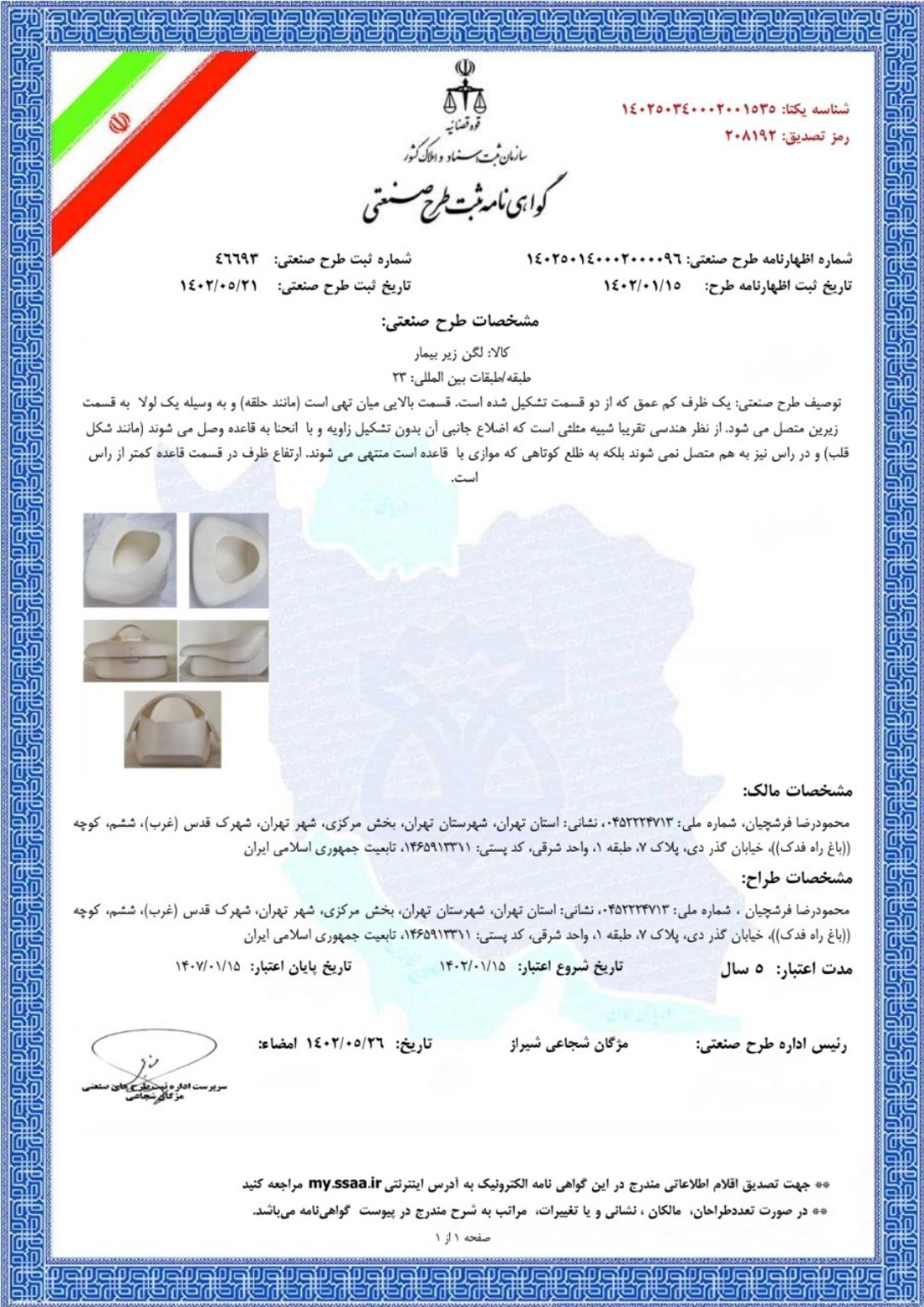
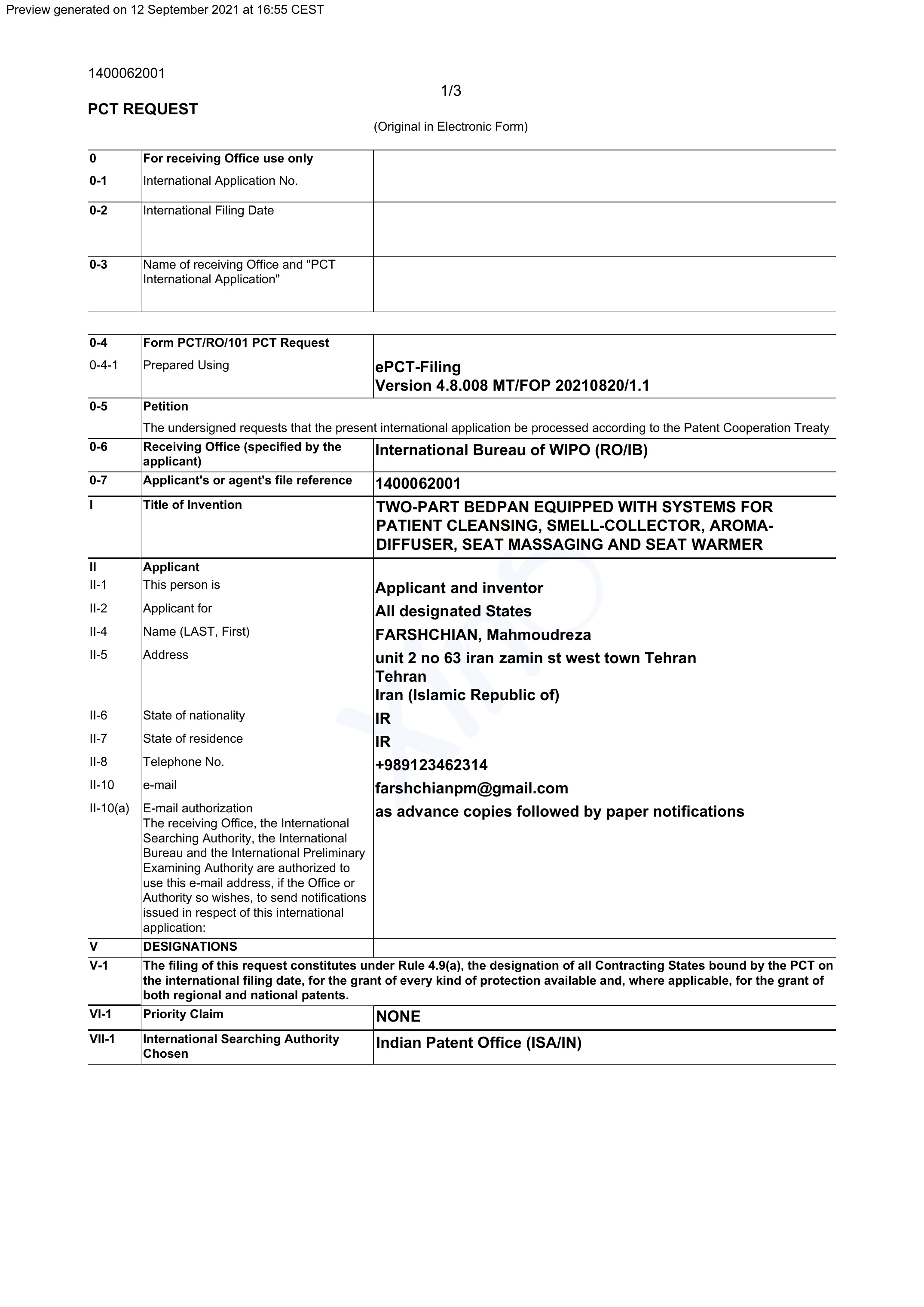
Two hospital ICU wards and Shirin Nursing Home state in signed letters that they used the ergonomic bedpan manufactured by Artin Nik Segal Co., approved its performance and recommended or confirmed its use. University letters explicitly connect the evaluated product with Xino and Artin Nik Segal Co. References to automated washing or disinfection describe the prototype evaluated in that study, not the current commercial Xino Portable Bidet.
The official letter identifies Mahmoudreza Farshchian—CEO of Artin Nik Segal and inventor of the ergonomic bedpan—as the industry-side client of the university’s industry-and-society research project. “Industry-side client” reflects the role stated in the letter.
The Dean’s letter explicitly states that the “Xino ergonomic bedpan, manufactured by Artin Nik Segal Co.” was evaluated in the joint study conducted by Tehran University of Medical Sciences and Iran University of Medical Sciences.
The university page presents the hospital-bedpan ergonomics study, lists Mahmoudreza Farshchian among the project collaborators and displays an image of the evaluated product.
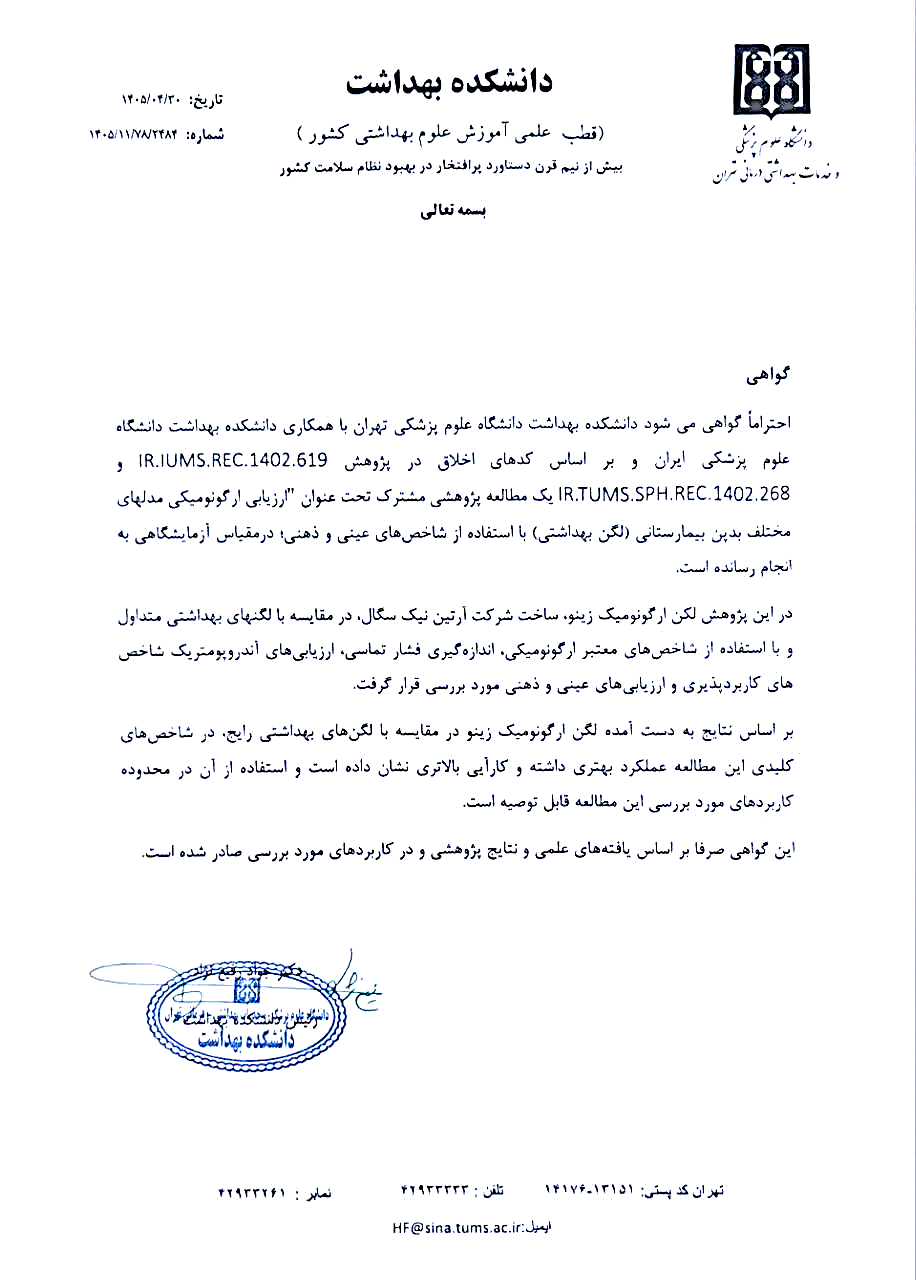
This official letter states that the Xino Ergonomic Bedpan manufactured by Artin Nik Segal Co. was evaluated in the joint study by Tehran University of Medical Sciences and Iran University of Medical Sciences and showed stronger performance and efficiency on key measures.
Tap the image for a larger view.
The signed certificate states that the ergonomic bedpan manufactured by Artin Nik Segal Co. was used for one month, produced greater satisfaction among patients and staff, and had its performance approved and its use recommended.
Tap the image for a larger view.
The signed certificate states that the ergonomic bedpan manufactured by Artin Nik Segal Co. was used for one month in the hospital ICU, produced greater satisfaction among patients and staff, and had its performance approved and its use recommended.
Tap the image for a larger view.
Shirin Nursing Home states that it used the ergonomic bedpan manufactured by Artin Nik Segal Co. for two months, observed satisfaction among residents and staff, and approved the device’s performance.
Tap the image for a larger view.
The official TUMS School of Nursing and Midwifery letter identifies Mahmoudreza Farshchian—CEO of Artin Nik Segal Co. and inventor of the ergonomic bedpan—as the industry-side client of the university research project.
Tap the image for a larger view. Tap the image for a larger view.
 Tap the image for a larger view.
 Tap the image for a larger view.
University Clinical Trial
Overall, the study found that, compared with the silicone bedpan available on the market—the most commonly used bedpan in nursing homes—the two-part bedpan equipped with an automated washing and disinfection system received higher scores across many dimensions from both older adults and their caregivers.
The findings indicate that using a two-part elimination bedpan equipped with an automated washing and disinfection system improves the experience of older adults and caregivers in nursing homes and reduces hygiene problems associated with elimination. This type of bedpan can increase satisfaction and facilitate hygiene care. The use of such advanced systems in older-adult care facilities is therefore recommended to improve the quality of life of this vulnerable group and reduce caregivers’ workload.
Joint University Study
The findings show that the new bedpan and the new hinged bedpan performed better than the conventional bedpan in most respects. In particular, the “new bedpan” delivered the best overall performance across different areas from the perspective of both participant groups—the operators and the simulated patients. This can improve efficiency and comfort for both groups when using bedpans.
Care assistants also found it easier to place the new bedpan under the patient and remove it than the other two bedpans; their next choices for this task were the new hinged bedpan and the conventional bedpan, respectively. The new and new hinged bedpans appear to be more suitable choices for preventing pain and injuries caused by force and pressure, with the conventional bedpan ranking next. Although none of the bedpans statistically matched the body dimensions assessed in this study, participants’ responses suggest that they considered the new bedpan more compatible with their anatomy; their next preferences were the new hinged bedpan and the conventional bedpan, respectively.
Based on these findings, the new bedpan is recommended as the primary option for use in healthcare settings because the redesigned bedpans substantially reduced pressure on the simulated patient’s lumbar, sacral and coccygeal regions. In the joint university study, pressure-sensor measurements showed that the Xino Ergonomic Bedpan exerted less pressure on the body and distributed pressure more evenly than the conventional bedpan. Whether these measured improvements reduce the incidence of pressure injuries requires further clinical study. The findings also indicate how bedpan design can affect physical comfort and perceived exertion and highlight the potential of the new bedpan to improve its characteristics for users with different demographic profiles. Further research can also examine the long-term effects of different bedpan types and improve ergonomic factors for both sexes.